
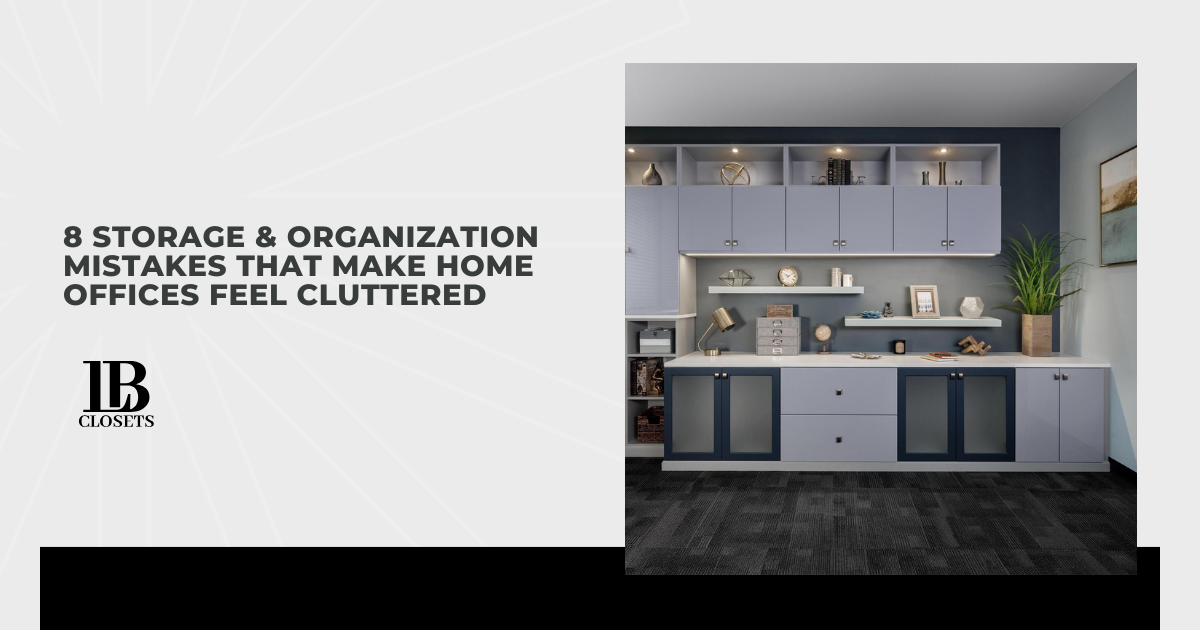
I've walked into more cluttered home offices than I can count, and space is rarely the real problem. Most of the mess traces back to storage habits that quietly work against the room instead of for it. Papers pile up, cords tangle, and shelves sit empty while everything else spills onto the desk and floor. These signs rarely announce themselves as a problem until the room feels crowded.
Once those signs show up, they tend to multiply fast instead of leveling off. One overlooked drawer or one skipped decision doesn't seem like much on its own, but it adds up as your equipment and supplies grow. Before long, the room feels cramped and chaotic even though there's technically enough space for everything you own. Recognizing the patterns behind the clutter is the first step toward a workspace that actually stays organized.
These eight home office mistakes are worth checking against your own setup before clutter takes over for good:
- Skipping vertical storage
- Letting paperwork pile up without a system
- Overcrowding the desktop
- Ignoring cord and cable management
- Mixing personal and work storage
- Choosing closed storage without a labeling system
- Underusing closet or nook space
- Forgetting to reassess storage as needs change
Some of these are easy to spot. Others hide in plain sight until you know what to look for.
Skipping Vertical Storage
Your walls hold more storage potential than most home offices ever use. When shelves stay empty or nonexistent, everything defaults to the desk or the floor, and that's where clutter starts to build. A few floating shelves or a wall-mounted organizer can hold books, supplies, and reference binders without eating into your actual workspace.
Vertical storage also keeps frequently used items within reach without turning your desk into a catch-all. Pegboards work well for tools, cords, or small accessories that don't belong in a drawer but still need a home. Cabinets installed higher up can store things you don't need daily, like archived files or backup equipment, while keeping your eye-level space clear.
If your walls are bare, that's usually the first sign your storage plan needs a second look. Adding vertical storage doesn't require a full redesign. It just means putting the space above your desk to work instead of letting it sit unused. Once those shelves and cabinets are in place, the rest of the space has room to breathe.
Letting Paperwork Pile Up Without a System
Paper has a way of taking over a home office faster than almost anything else. Without a clear system, mail, invoices, and printed notes end up in loose stacks that spread across the desk and onto nearby surfaces. Even a small pile can make an otherwise tidy office look disorganized within days.
A simple system doesn't need to be complicated to work. Labeled folders, a filing cabinet, or a wall-mounted sorter can give every document a designated spot instead of a random one. Sorting by category, like bills, active projects, and reference material, makes it easier to find what you need without digging through unrelated papers.
In my experience, the offices that stay organized aren't the ones with the fanciest filing setup. They're the ones where sorting happens weekly instead of piling up for a month. Setting aside a few minutes to file new paperwork keeps the system working, and your desk stays clear when important documents actually have a place to go.
Overcrowding the Desktop
A desktop covered in supplies, gadgets, and decor items rarely leaves room for actual work. Pen holders, stacked notebooks, extra chargers, and decorative pieces all compete for the same small surface, and clutter builds even when each item seems useful on its own. The more objects fighting for space, the harder it becomes to find anything or focus on the task in front of you.
Keeping the desktop functional means being selective about what earns a permanent spot there. Items you use daily, like a keyboard, a notepad, or a single desk lamp, belong within reach. Everything else, from spare cables to seasonal decor, works better stored in a drawer or on a nearby shelf where it's still accessible but out of the way.
A crowded desktop also makes cleaning and reorganizing harder than it needs to be. Fewer items on the surface means less to shuffle around every time you need to wipe it down or set up for a new project. It also leaves more room to spread out when you're working on something that needs the extra space. A lighter desktop gives the rest of your workspace room to stay organized too.
Ignoring Cord and Cable Management
Cords have a way of undoing an otherwise organized home office. Chargers, monitor cables, and power strips tangle together under and around the desk, and even a tidy surface can look chaotic once you glance down. Loose cords also create a tripping hazard and make it harder to move furniture or clean underneath your setup.
Managing cables doesn't require an expensive overhaul. A few simple tools can keep everything routed and out of the way:
- Cable Clips: Keep cords bundled and routed along the edge of the desk instead of hanging loose
- Zip Ties: Bundle multiple cables together so they move as one instead of tangling separately
- Cord Tray: Catches excess cable length underneath the desk, out of sight and off the floor
- Power Strip Mount: Keeps the strip off the floor and cords running along a single fixed path
Bundling cables by device and securing them along a single path keeps the area beneath your desk clear and easy to navigate. Even a few minutes spent tracing cords back to their source makes future changes easier to manage. This kind of small change makes a noticeable difference in how organized the whole office feels.
Mixing Personal and Work Storage
A home office that doubles as a catch-all for household items rarely stays organized for long. Craft supplies, mail for the whole family, or kids' school papers start sharing shelf space with work files and equipment, and the line between the two blurs fast. Once that boundary disappears, it's harder to find anything, whether it's a work document or a spare set of keys.
I've seen this happen most often in offices that started as single-purpose rooms and slowly absorbed overflow from the rest of the house. Setting aside dedicated storage for non-work items, even a single bin or drawer, keeps them from creeping onto shelves meant for your job. Everything work-related stays easier to locate when it isn't competing with items that belong somewhere else.
Separating the two doesn't mean the room can't serve multiple purposes. It just means giving each category its own defined space instead of letting them blend together. A little structure here keeps your home office functioning as an office first, no matter what else it ends up holding.
Choosing Closed Storage Without a Labeling System
Closed storage like bins, drawers, and cabinets keeps a home office looking tidy from the outside, but it can hide a mess if nothing inside has a clear spot. Without labels, finding a specific item means opening multiple containers and sorting through unrelated supplies. That defeats the purpose of closed storage in the first place, since the goal is easy access, not just a clean-looking surface.
Labeling doesn't need to be elaborate to work. A printed label, a piece of tape with handwriting, or a small tag on each bin is enough to tell you what's inside without opening it. Grouping similar items together, like all cables in one bin and all stationery in another, makes the system easier to maintain over time.
This small step also makes it easier for anyone else using the space to find what they need. A labeled system holds up even as new items get added, since there's already a defined spot for anything that fits the existing categories. Closed storage works best when what's behind the door matches what the label promises.
Underusing Closet or Nook Space
A closet or nook attached to a home office often ends up as a dumping ground instead of usable storage. Boxes get pushed inside without any real organization, and the space fills up with items that don't have a designated spot elsewhere. What could hold filing systems, extra equipment, or supplies instead becomes another place clutter collects.
The right storage tools can turn that space into something functional:
- Adjustable Shelving: Creates defined levels for bins, files, or supplies instead of one open stack
- Stackable Bins: Make use of vertical space while keeping similar items grouped and easy to pull out
- Vertical Dividers: Keep flat items like folders or boards upright instead of sliding into a pile
- Hanging Organizers: Add storage to the back of a door or wall without taking up floor space
Treating this space as an extension of your office, rather than separate from it, changes how it gets used. A defined layout makes the space far more usable than loose stacking ever could. It takes pressure off the rest of the office and gives clutter one less place to collect. Once that closet or nook is pulling its weight, the rest of your storage plan has room to work the way it's supposed to.
Forgetting to Reassess Storage as Needs Change
Your storage setup rarely stays perfect for as long as you'd like it to. New equipment, more paperwork, or a shift in how you use the room can outgrow bins and shelves that once had plenty of room to spare. What felt organized a year ago might already be straining under the weight of things it was never meant to hold.
Storage systems need a second look every so often, not a permanent setup you install once and forget. A shelf that held office supplies might work better for reference books, and a drawer meant for cables might need to shift to files instead. The system itself doesn't need to change, just what goes where within it.
Checking in on your setup every few months catches these mismatches before clutter builds up again. I've found that the offices that stay organized long term are the ones where the owner treats storage as something to adjust, not something to set and forget. Revisiting what's working and what isn't every so often keeps your home office functional as your needs evolve.
Conclusion
Home offices rarely stay organized by luck. They stay that way because you keep paying attention to the small habits shaping the room, long after the initial setup was finished. Fixing even a few of these mistakes frees up more space than adding storage ever could. Once those habits change, your room finally starts working the way it was meant to.