
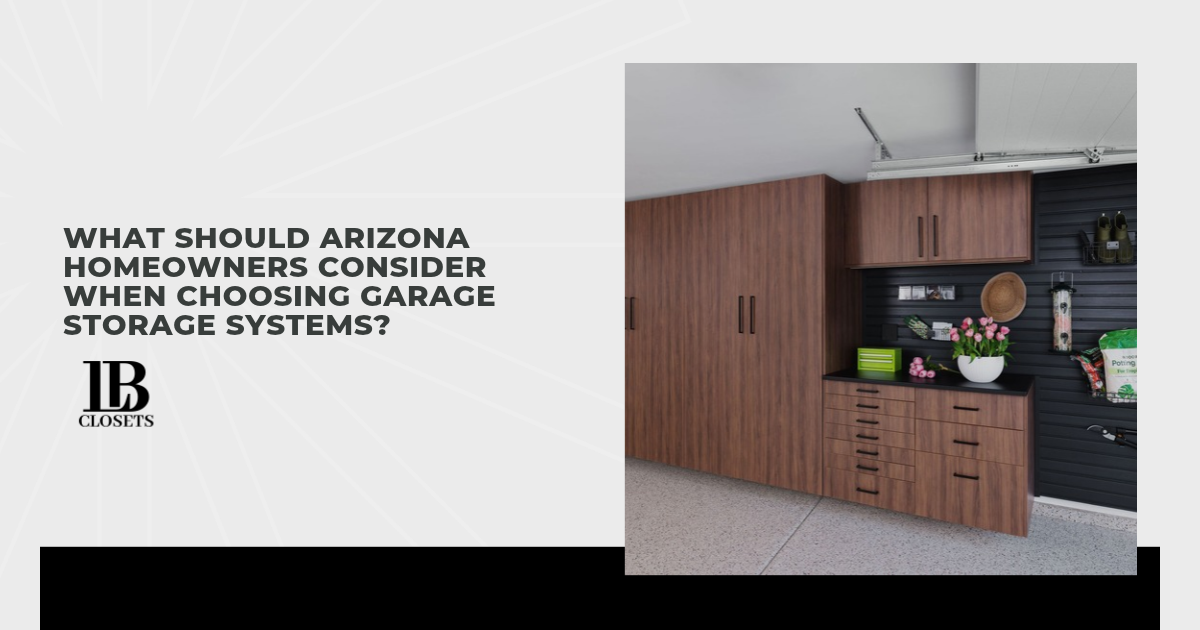
Choosing garage storage systems for your Arizona home starts with knowing how you’ll use the space. You might need room to unload groceries beside a parked SUV or grab your golf bag without moving boxes. Storage that looks roomy in a photo can feel cramped beside your vehicles. The condition of your garage matters too, especially if the space isn’t cooled during the summer.
Summer heat should help guide your choice of materials, along with the demands of daily use. Before comparing finishes, consider what you’ll store and how much space you can spare. You’ll also want to know what the price includes and how the system can adapt as your needs change. These details help you compare designs and decide where to spend your budget.
Consider these factors when choosing garage storage systems for your Arizona home:
- The belongings your garage needs to hold
- Materials suited to your garage’s climate
- A layout that preserves parking and access
- The right combination of storage options
- Weight capacity and installation requirements
- Dust protection and easy cleaning
- Flexibility for changing storage needs
- The full installed cost and warranty coverage
Before you settle on a design, make sure it fits the way you actually use your garage.
The Belongings Your Garage Needs to Hold
Your current belongings can tell you more about your storage needs than a showroom display. Start by listing what you plan to keep in the garage, including items stored elsewhere because they don’t fit. Golf bags, gardening tools, and holiday decorations each need different amounts of space. A list helps you spot those needs before you commit to a design.
Size matters as much as the number of items you own. Several small tool cases might fit together, while one bulky cooler could fill the same space. I’d measure your largest belongings and the bins you plan to keep before reviewing storage dimensions. Include handles, wheels, and lids so the proposed spaces can hold the whole item.
How often you use each item adds another useful detail to your list. Equipment you reach for every weekend needs easier access than decorations you unpack once a year. Note which items you use together, such as gardening gloves and pruning tools, to discuss during the design consultation. These measurements and notes will help you judge how well garage storage systems fit what you own.
Materials Suited to Your Garage’s Climate
An uncooled garage in Phoenix faces different conditions than one in a cooler Arizona mountain town. Tell your designer about summer heat, direct sunlight, and any damp areas you’ve noticed. Monsoon weather can bring more moisture, so a desert location doesn’t rule out moisture concerns. Ask the supplier to confirm that the proposed materials suit the conditions in your garage.
A cabinet’s finish tells you only part of its construction story. The same cabinet can contain wood-based panels, laminate surfaces, and coated metal parts. Ask how each part is built so you can assess the whole cabinet. When reviewing samples, find out what’s beneath the surface and how the faces, edges, and hardware are protected.
Moisture deserves specific questions because wood absorbs and releases moisture as the surrounding conditions change. Protective coatings can slow this process, but they don’t prevent it completely. Ask what a moisture-resistance claim covers, including the difference between normal humidity and direct contact with water. Product details give you more useful information than a broad description such as “durable.”
A Layout That Preserves Parking and Access
Empty floor space can make your garage look roomier than it feels during a normal day. Once your vehicles are parked, you can see how much space remains for storage and movement. Cabinet depth matters because it affects the room beside a vehicle, even with the cabinet doors closed. Have your designer assess the space with your vehicles in their usual positions.
Door movement adds another detail to the plan. You’ll need room to open vehicle doors and use cabinet doors or drawers without collisions. Walk your usual route between the garage entrance and your home, noting where carrying bags becomes awkward. The design should also allow access to utilities and equipment without blocking the garage door or its tracks.
I’d review the proposed layout with vehicle doors open before approving the design. Ask your designer to show how far cabinets will extend into the room when open and closed. Include any golf cart or motorcycle you park inside so every vehicle is accounted for. A useful layout lets you park, move around, and reach your belongings without rearranging the garage.
The Right Combination of Storage Options
Different belongings call for different ways to store and retrieve them. Cabinets may hold smaller supplies but leave a bicycle or long-handled rake without a useful spot. Your list can show which items need enclosed storage, hanging space, or room above the floor. Let those needs guide the mix of garage storage systems you consider.
Each storage option has a specific role in the design:
- Enclosed Cabinets: Shelves and drawers group smaller belongings into separate spaces and keep the contents out of sight.
- Wall Organizers: Hooks, baskets, and holders give tools and equipment you use often an accessible place along the wall.
- Overhead Racks: Elevated storage holds seasonal bins and items you rarely retrieve, provided you can reach them comfortably.
- Workbenches: A dedicated surface provides room for hobbies or equipment upkeep, with nearby storage for your supplies.
You don’t need every option for a garage to work well. If you rarely need a work surface, a workbench could take up space you’d use for storage. Discuss how you’ll retrieve and put away belongings with each proposed feature, especially bulky or awkward items. The right mix makes daily tasks easier without adding features you’re unlikely to use.
Weight Capacity and Installation Requirements
A shelf that fits your belongings must also support their combined weight. Tool cases and packed bins place different demands on storage than lightweight decorations do. Check the limits for each shelf, drawer, and accessory, plus any limit for the whole unit. My first question would be what each rating covers, since one shelf’s capacity differs from a cabinet’s total capacity.
How you arrange the load also matters. Some overhead racks require an evenly spread load, so staying below the total limit isn’t the only requirement. Ask your designer how to load the proposed features, especially if you’ll store several heavy items together. Keep the manufacturer’s instructions available so you can check them when putting belongings away.
The mounting requirements must also suit your garage’s construction. Have a qualified installer check the supporting structure before you approve wall-mounted or overhead storage. Ask how the storage will be secured and if the assessment limits where it can go. You can make a more informed choice once the installer has checked the mounting needs and your planned loads.
Dust Protection and Easy Cleaning
Dust on stored belongings can add another chore to your garage routine. If you often wipe equipment before using it, consider which items would benefit from enclosed storage. Cabinet doors and full backs offer more separation from the garage than open shelves do. Ask how the cabinet is built, since enclosed storage shouldn’t be assumed to be dustproof.
Cleaning access matters as much as keeping belongings covered. Deep corners and narrow gaps can make dusty surfaces hard to reach. Check how easily you can wipe cabinet interiors and reach the floor beneath or beside each unit. Ask your designer to explain any gaps that could leave you with awkward spaces to clean.
Surface-care needs should also influence your choice. Before choosing a finish, request the manufacturer’s cleaning instructions and check which products are approved. Consider how much equipment you’d need to move or unload for routine cleaning. Storage that’s easy to maintain helps you keep the garage usable after the first round of organizing.
Flexibility for Changing Storage Needs
The equipment you store today may change a few years after installation. A new hobby or a larger tool collection can affect what needs to fit. Adjustable parts give you options for making room within the existing system. Before approving a design, find out which parts you can move and which dimensions will stay fixed.
Adjustable cabinet shelves let you change the space between compartments as your belongings change. Check how many shelf positions are available and how easy adjustments will be. For wall storage, ask which hooks, baskets, and holders you can move or replace within the system. A demonstration helps you judge how practical those changes would be once the storage is in use.
Future additions deserve a separate discussion during planning. Ask if the product line accepts extra parts and what expanding the system would involve. You don’t need to leave room for every possible purchase, but discuss any equipment you plan to buy. Knowing how the system can change helps you choose storage that stays useful as your routines evolve.
The Full Installed Cost and Warranty Coverage
A quote is easier to assess when you know what the price includes. Request a written breakdown of the storage features, design services, and installation work. Clarify charges for delivery, removing old storage, or preparing the space before the work begins. You’ll be better prepared to set your budget when the full scope is clear.
Comparing quotes also means checking that each covers the same work. I prefer itemized quotes because they make differences in materials, accessories, and services easier to spot. If one proposal costs less, ask which features or services explain the difference. You can then decide which features matter most based on how you’ll use the storage.
Warranty terms deserve the same attention as the purchase price. Read what’s covered, how long coverage lasts, and which exclusions or care requirements apply. Confirm if installation work has separate coverage and who you’d contact about a problem after completion. A clear quote and written warranty help you understand the price and the support available afterward.
Conclusion
The value of garage storage systems becomes clear during an ordinary day in your Arizona home. You can reach what you need, put it away easily, and still have room to park. A design that supports those routines is easier to appreciate long after the installation is complete. Choose storage you’ll be glad to use on a busy Tuesday, when convenience matters most.