
There's a certain satisfaction in walking into a garage that's ready to work. A garage workbench is the anchor of that setup, the spot where projects actually come together. The best bench for your neighbor could be the wrong one for you, so the choice is rarely as simple as it looks. Your space, your projects, and your tools all shape what you really need.
The tricky part is that workbenches vary wildly in size, material, and features. Picking one without a plan often leaves you with a bench that's too big, too flimsy, or stuck in an awkward corner. A little upfront thinking saves you the regret and a fair bit of money. I've found that a few clear checks make the whole decision far easier.
Weigh these factors before choosing a garage workbench:
- Size it to your space and your projects
- Choose a durable worktop material
- Check the weight capacity
- Decide between fixed, mobile, and folding designs
- Look for built-in storage
- Get the work height right
- Plan for power and lighting access
Work through these one at a time and you'll land on a bench that suits your garage and the way you like to build.
Size It to Your Space and Your Projects
Before anything else, grab a tape measure and map out where the bench will live. Note the wall length you can give it, then check the clearance you need for the garage door, parked cars, and room to move around it comfortably. A bench that blocks a car door or crowds a walkway gets frustrating fast. Taping its rough outline on the floor is a quick way to see the real fit before you commit.
The work you do sets the surface you need. A weekend gardener does fine with a compact top, while a woodworker wrangling long boards wants something wider and deeper with room to clamp and spread out. Picture your biggest typical project and size up from there. A garage workbench that runs slightly larger than your current work leaves a little breathing room as your skills grow, without swallowing the whole bay.
When your space is tight but your projects aren't, get creative with the layout. An L-shaped bench tucked into a corner gives you more usable surface without eating a full wall. A narrower top that runs longer suits lumber, while a deeper, shorter one fits assembly work in a compact bay. Let the shape of the room guide the shape of the bench, not the other way around.
Choose a Durable Worktop Material
The surface takes the brunt of every project, so its material matters more than people expect. Solid wood tops, like maple butcher block, absorb impact well and feel forgiving under hand tools, though they need the occasional oiling to fend off moisture. Steel and stainless tops shrug off heat, grease, and heavy abuse, which makes them favorites for mechanics and metalwork. Bamboo splits the difference with a hard, eco-friendly surface that resists scratches at a gentler price.
I tend to steer people toward the material that matches their messes rather than the prettiest option. If you're staining wood or wiping up spilled oil, a sealed or steel top saves you a lot of grief. If you mostly assemble and tinker, a warm wood surface is a pleasure to work on and easy to refresh. Think about what you'll actually spill, drop, and clamp, then pick the top that takes it in stride.
Thickness and finish deserve a look too, not just the material itself. A thicker top resists flexing and dampens vibration when you're hammering or routing. A sealed or laminated surface wipes clean and keeps glue and paint from soaking in, while a raw wood top wears its dents and stains like a badge of honor. Decide how much wear you're willing to live with and finish the top to match.
Check the Weight Capacity
A bench that wobbles or sags under a heavy load turns precise work into a guessing game. Check the rated capacity against the heaviest things you'll set on it, including bench-mounted tools, engine parts, or a vise cranked down on stock. Manufacturers usually list a static rating, so leave yourself a comfortable margin above your real-world maximum. A sturdy steel frame and solid legs do far more for stability than a thick top alone.
Capacity isn't only about the number on the spec sheet. Look at how the bench is braced, since cross-supports and a lower shelf stiffen the whole structure and stop side-to-side sway. Bolting the bench to a wall or floor adds rock-solid footing for hammering and heavy clamping. Pay attention to these details and your work surface stays planted no matter what you throw at it.
Keep in mind that a rating describes steady weight, not sudden force. Pounding on stock or leaning into a hand plane sends shock loads through the frame that a static number doesn't capture. Heavier-gauge steel and welded joints hold up to that kind of abuse far better than a bolted-together flat pack. Buy for the rough days and the bench won't flinch on the easy ones.
Decide Between Fixed, Mobile, and Folding Designs
The right configuration depends on how your garage pulls double duty. A fixed bench bolted in place gives you the most stability and the heaviest load rating, which suits a dedicated shop corner that never moves. A mobile bench on locking casters rolls to where the work is, then parks against the wall when you need the floor back. A folding or wall-mounted bench drops flat when you're done, freeing up a tight single-car garage for parking.
Weigh the trade-off honestly before you pick. A folding or mobile design buys back precious floor space, but it gives up some rigidity and surface area in return. If your garage stays a workshop, go fixed and enjoy the steadiness. A bay that parks a car every night is better served by a mobile or folding design that keeps both jobs possible without a constant shuffle.
The hardware makes or breaks a movable design. Locking casters with a real brake keep a rolling bench from drifting mid-cut, while cheap wheels turn it into a hazard. Sturdy hinges and a solid latch let a folding top carry weight without sagging at the seam. Quality moving parts are what let a flexible bench feel almost as steady as a fixed one.
Look for Built-In Storage
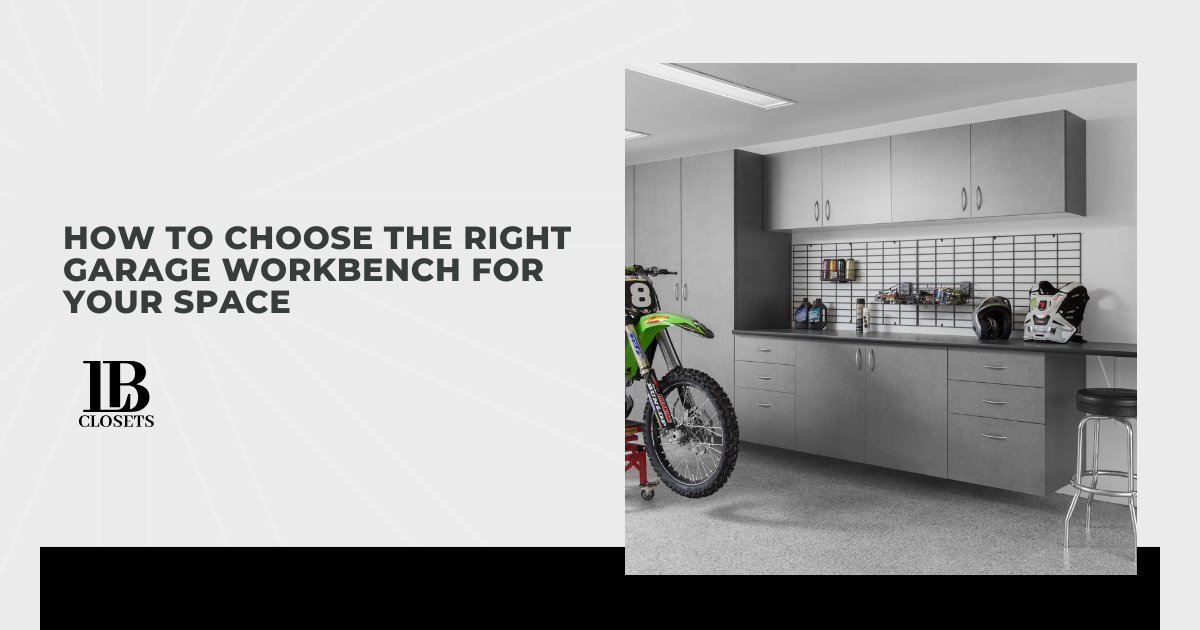
I judge a workbench as much by what's under and around the top as by the surface itself. Drawers keep small tools and hardware sorted and out of the sawdust, while open shelves swallow bulkier gear like power tools and paint cans. A pegboard back panel puts your most-used hand tools in plain sight and within easy reach. The more your storage hugs the bench, the less your work surface turns into a catch-all pile.
Match the storage style to how you work, not just to what looks tidy in the showroom. A cabinet base locks valuables away and keeps dust off, which suits pricey tools and a shared garage. Drawers on smooth glides beat fixed bins when you're hunting for a specific bit mid-project. Plan the storage around your daily reach and the bench stays clear for the work that actually needs the space.
Don't forget the wall above the bench, since it's prime real estate that's easy to overlook. Slatwall panels and magnetic strips hold tools right where your hands reach for them. A shallow shelf or two up high stores the items you grab less often and keeps the busy zone clear. The vertical space around your bench often doubles your storage without adding a single square foot to the footprint.
Get the Work Height Right
A bench at the wrong height nags at your back and shoulders long before a project's done. The general rule puts the surface around your wrist height when you stand with your arms relaxed at your sides, which keeps your posture neutral for most tasks. Detailed work like electronics or model building feels better a touch higher, while heavy hammering and planing suit a slightly lower top. Standing at the spot where the bench will go and miming your usual work gives you a quick read on what feels natural.
Your own stature matters more than any standard measurement. A taller builder hunched over a stock-height bench pays for it in sore muscles by the end of an afternoon. Adjustable legs solve the guesswork outright, letting you fine-tune the surface or change it as your projects shift. Comfortable long sessions come down to a height that fits your body and your tasks.
Remember that anything mounted to the top raises your real working height. A bench grinder or a vise lifts the action several inches above the surface, so factor it in if you'll reach for them often. Builders who switch between standing and perching on a stool do well to split the difference a touch. Test the height with the tools you'll actually clamp on, not just the bare top.
Plan for Power and Lighting Access
Even the sturdiest bench falls short if you can't see or plug in. Position it near an outlet so you're not snaking extension cords across the floor, and add a power strip or a model with built-in outlets to keep drills, chargers, and sanders fed. Good light matters just as much, since a shadowed surface hides details and invites mistakes. A bright overhead fixture paired with a task lamp clears away the dark spots where precise work happens.
Think a step ahead about how your power needs might grow. A bench backed by a pegboard or frame gives you a handy spot to mount a strip, a charging station, or a clamp-on light. Running your tools off a single nearby circuit also saves you from tripped breakers mid-cut. With power and light sorted early, your bench becomes a place you actually want to spend an afternoon.
The kind of light matters as much as the amount. Cool, daylight-balanced bulbs show true colors and sharp edges, which helps with finishing and fine detail. Placing a light source to the side rather than straight overhead softens the shadow your own hands cast over the work. A dedicated charging spot for cordless batteries also keeps your tools ready the moment you walk in.
Conclusion
The best garage workbench isn't the priciest one or the one with the most features. It's the one that fits your space, stands up to your work, and sits at a height that keeps you comfortable through the afternoon. Once you've taken the measurements and weighed the trade-offs, the right choice tends to make itself. A bench chosen around your own projects is one you'll be glad to stand at for years.