
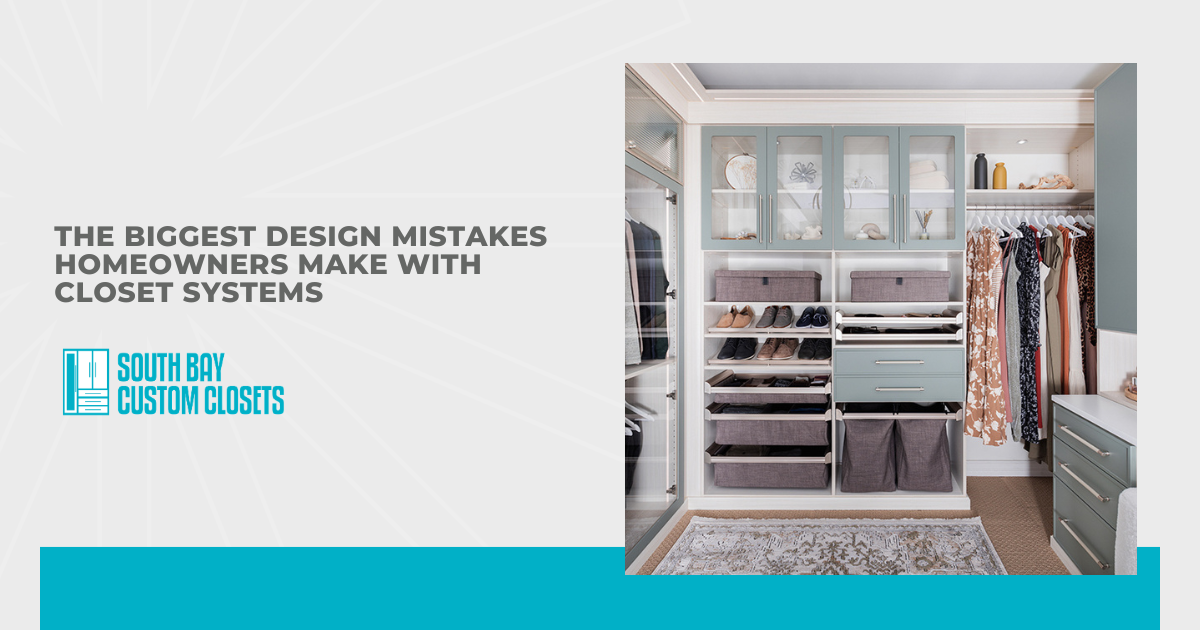
Closet systems can completely change how your space feels and functions, but only when they’re designed with purpose. Small missteps during the design phase can lead to clutter, wasted space, and unnecessary adjustments later on. A well-planned layout can simplify daily routines, as I’ve seen in many closet designs.
If you’re planning to upgrade your storage, it helps to understand what separates a layout that works from one that doesn’t. Many designs look great at first glance but feel less intuitive in daily use. The difference between a frustrating closet and a seamless one often comes down to a few key design choices.
Here are the biggest mistakes to watch out for when designing closet systems:
- Choosing closet systems based on looks instead of function
- Failing to design for your actual wardrobe and accessories
- Misjudging dimensions and wasting available space
- Choosing closet systems that lack flexibility
- Overlooking lighting and visibility
- Using low-quality materials that don’t last
- Taking the DIY route without proper planning
A closet can look polished on the surface and still create frustration in daily use. Keep reading for a closer look at the mistakes that matter most and the design choices that can help you avoid them.
Choosing Closet Systems Based on Looks Instead of Function
Beautiful finishes and clean layouts can grab your attention right away, and it’s easy to see why. What looks impressive in a showroom doesn’t always translate well to everyday use. A closet should support your routine first, with visual details coming in to enhance the experience rather than define it.
Daily use tends to reveal design gaps quickly. Shelves may look balanced on paper but feel inconvenient when your most-used items are hard to reach. In real use, function has a much greater impact on how satisfied you feel with your space.
Practical decisions usually start with understanding your habits. Where you get dressed, what you reach for most often, and how much room you need to move all play a role. These details shape closet systems that feel natural to use instead of being frustrating over time.
Failing to Design for Your Actual Wardrobe and Accessories
One of the most common issues I notice is when a layout is chosen without fully considering what needs to be stored. Closet systems aren’t one-size-fits-all, and a setup that works for one person can feel completely off for another. When the design doesn’t reflect your actual wardrobe, it often leads to overcrowding in some areas and unused space in others.
Taking a closer look at what you own can make the planning process much clearer. Start with a simple breakdown of your clothing, including how many items need hanging space and how many are better suited for shelves or drawers. This kind of awareness helps create a layout that feels balanced and practical from the start.
Accessories tend to be an afterthought, but they play a big role in how organized your closet feels. Shoes, bags, belts, and jewelry need dedicated storage to stay manageable. When these items are given proper space, the entire closet feels easier to maintain and more enjoyable to use.
Misjudging Dimensions and Wasting Available Space
Accurate measurements are the foundation of effective closet systems. Even small miscalculations can lead to awkward gaps, cramped sections, or storage that doesn’t function as intended. A layout may look efficient on paper but feel restrictive once you start using it.
Vertical space is often underused, which limits how much your closet can actually hold. Upper sections tend to be overlooked, while lower areas become overcrowded and harder to manage. Making better use of height can significantly improve your storage capacity without making the space feel tight.
Awkward corners and narrow sections also deserve careful attention. These areas can either become wasted space or valuable storage, depending on how they’re designed. A more intentional layout helps your entire closet feel balanced and easier to use.
Choosing Closet Systems That Lack Flexibility
Fixed shelves and permanent rod placements may seem efficient at first, but they can limit how your closet adapts over time. Storage needs naturally change as your wardrobe evolves or your routine shifts. A layout that feels right today can start to feel restrictive sooner than expected.
Adjustable features allow your closet systems to keep up with those changes. Movable shelves, modular sections, and flexible hanging areas make it easier to reconfigure your space without starting from scratch. This kind of adaptability adds long-term value and makes the closet more practical to use.
Flexibility doesn’t require a complicated setup. Small design choices, like adjustable shelving or repositionable rods, can make a noticeable difference. A closet that can shift with your needs tends to stay functional and relevant much longer.
Overlooking Lighting and Visibility
Lighting plays a bigger role in closet systems than it often gets credit for. In many layouts I’ve reviewed, a single overhead fixture leaves shadows in corners, shelves, and lower compartments. Poor visibility can make it harder to find items and keep everything organized.
A well-lit closet makes daily use feel smoother and more efficient. When everything is clearly visible, it’s easier to keep track of what you have and avoid unnecessary clutter. You’ll notice how much more functional the space feels once lighting is improved.
Layered lighting can enhance both function and overall experience. Adding strip lights, puck lights, or targeted fixtures helps illuminate specific sections of the closet. This is one of those upgrades I like to prioritize because of how quickly it improves usability.
Using Low-Quality Materials That Don’t Last
Material quality has a direct impact on how well your closet systems perform over time. Shelves can start to sag, hardware may loosen, and drawers can lose their smooth operation when lower-grade materials are used. Your closet might look finished at first but struggle to hold up under daily use.
Durability becomes especially important in high-use areas. Hanging rods need to support weight without bending, and shelves should remain sturdy even when fully loaded. Choosing materials that can handle your storage needs helps prevent early wear and unnecessary repairs.
Balancing cost and quality is key when you’re making these decisions. Less expensive options can be appealing upfront, but they don’t always offer the same level of reliability. A well-built closet system tends to maintain its function and appearance much longer, making it a more practical investment for you.
Taking the DIY Route Without Proper Planning
A DIY closet project can feel like a practical and rewarding option, especially with so many systems available today. However, designing and installing closet systems involves more than just assembling components. Layout decisions, measurements, and spacing all need to work together for your space to function properly.
In some cases, projects run into trouble because the build starts before the design is fully thought through. I’ve seen how misaligned shelves, poor spacing, or limited access to certain sections can affect how your closet works every day. Fixing these issues after installation often takes more time and effort than you might expect.
Handling parts of the project yourself can still be a great approach with the right preparation. Clear planning and accurate measurements go a long way, and in more complex setups, a professional installation team can help ensure everything functions as intended. A bit of planning upfront helps you create a closet that feels intentional and easy to use.
Conclusion
It’s easy to overlook how much your closet affects your day until something feels off. The choices you make during the design stage have a lasting impact on how the space feels and functions every day. A more intuitive and organized space tends to follow when closet systems are designed around real habits and priorities, something I always keep in mind when planning layouts. A little extra intention upfront can turn a basic storage area into something you actually enjoy using.