
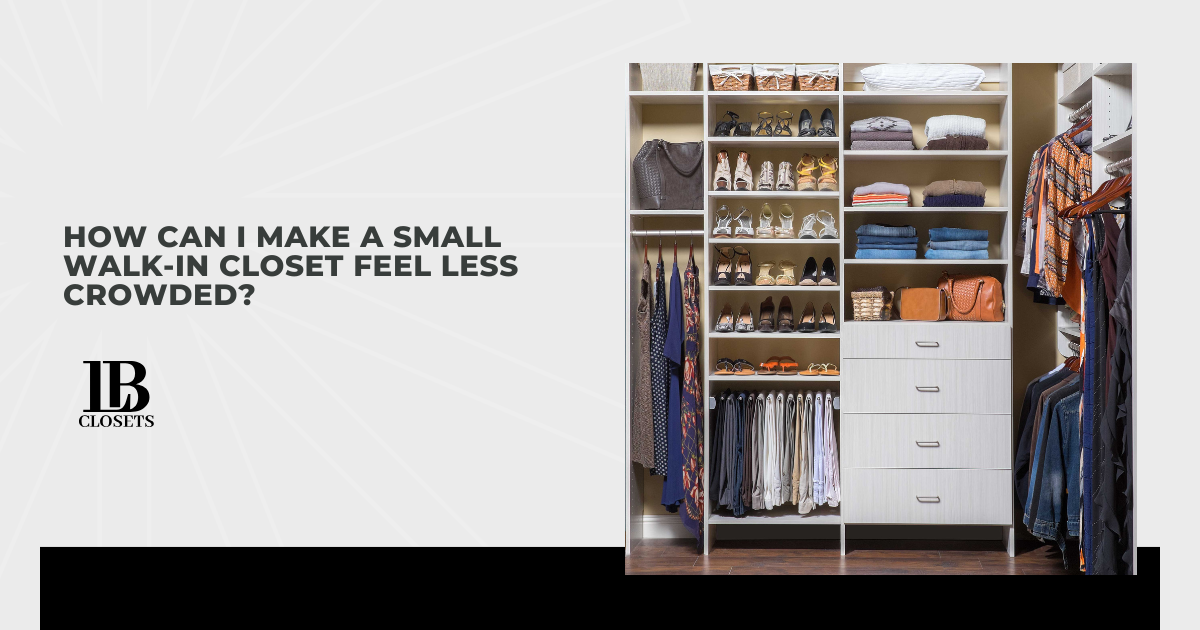
Your walk-in closet might have room for your clothes but barely enough space for you to get dressed. Pulling out one shirt can disturb several others, and reaching a drawer may require moving something off the floor. Even after you tidy up, the room can still feel crowded. The problem may involve how much you’re storing, how the storage is arranged, or how busy the space looks.
Before adding more organizers, I’d pinpoint where using your closet becomes frustrating. Notice what gets in your way during a normal morning and what’s difficult to put back afterward. These observations can help you decide which changes deserve attention first. You can then make improvements that suit your routine without filling every available gap.
To help your small walk-in closet feel less crowded, focus on these practical changes:
- Reduce what your closet needs to hold
- Keep the walking path clear
- Match hanging space to your clothing
- Size and position shelves for better access
- Give small accessories defined storage
- Improve lighting in shadowed areas
- Simplify the closet’s visual appearance
Let’s look at how each change can make the space more comfortable and easier to use.
Reduce What Your Closet Needs to Hold
Extra bedding, unused bags, and clothes you’ve stopped wearing can quietly take over your closet. Before changing the layout, review what’s stored there and decide what still belongs. Start with one manageable category, such as shirts or shoes, so you can finish sorting without emptying the entire room. Separate the items you regularly use from anything you’re ready to donate, repair, or store elsewhere.
Occasional clothing deserves a more thoughtful decision than a simple deadline for when you last wore it. You may still need a formal outfit even if it hasn’t left its hanger recently. Consider its fit, condition, and purpose before deciding to keep it. For items awaiting repairs, choose a realistic completion date so they don’t remain in limbo.
Seasonal clothing can move elsewhere if you have suitable storage available. Keep it clean, dry, and labeled so you can retrieve it when needed. Avoid transferring so much into another room that you create a second crowded space. Once you’ve settled on what stays, you’ll have a clearer picture of how much closet storage you actually need.
Keep the Walking Path Clear
I suggest checking your walking path before deciding where another organizer should go. You should be able to turn toward your clothing without stepping around a basket or squeezing past a rack. Floor space can disappear quickly when several small objects collect along the same route. Pay particular attention to anything you routinely move before getting dressed.
Check drawer and door clearance as part of this assessment. Open them fully and stand where you’d normally reach inside. An organizer may fit when everything is closed but block access during use. Your layout needs to accommodate these everyday movements as well as the storage itself.
Give your hamper a position outside the main walking path, and check that you can still use it comfortably. A smaller hamper may suit the space better if you empty it regularly. Avoid adding a stool or bench unless there’s room to use it without obstructing access. The useful test is how freely you can move through your walk-in closet during a normal morning.
Match Hanging Space to Your Clothing
Closet rods often reflect a standard layout that doesn’t match the clothes you own. Your wardrobe might contain mostly shirts and folded trousers, yet the entire rod sits above a large unused gap. Conversely, dresses or long coats may bunch against storage below them. Look at garment lengths before deciding how to divide your hanging space.
Two levels of hanging rods can suit shorter garments when there’s enough height for both rows. Allow clothing to hang freely without resting on the lower rod or floor. Keep a separate full-height area for longer pieces, sized around how many you own. You’ll also need to reach both rods comfortably when taking clothes out and putting them away.
Leave enough space along each rod to slide hangers and see individual garments. Clothes packed tightly together make choosing an outfit more difficult, even when everything technically fits. Before adding another rod, check that the hanging clothes won’t project into your walking path or overlap an adjoining section. Successful hanging storage balances usable capacity with easy access.
Size and Position Shelves for Better Access
Deep shelves can hide folded clothing behind the front row. Wide gaps between shelves may also encourage tall stacks that collapse when you pull out one item. Check how your folded clothes and shoes fit within the available space. Shelf dimensions should support their contents without making you reach through several layers.
Adjustable shelving lets you change the spacing to suit different items. Short stacks of T-shirts need less clearance than taller boots, so identical gaps may waste usable space. Leave enough room above each group to remove an item comfortably. My test for shelf spacing is simple: Can you take out a folded piece without disturbing the stack above it?
Place the clothing and shoes you use most often within comfortable reach. Higher shelves can hold lightweight belongings you need less frequently. Avoid an arrangement that requires climbing just to retrieve an everyday item. Before settling on shelf positions, test the reach with the belongings you actually plan to store there.
Give Small Accessories Defined Storage
Belts, jewelry, and scarves can spread across a closet when they don’t have assigned places. You may start with a small pile and gradually lose an entire usable surface. Separate accessories by how you use them and how they need to be stored. Then choose organizers that fit both the items and the available space.
Several compact options can help you keep accessories accessible:
- Drawer Dividers: Separate jewelry and other small items into compartments so you don’t have to sort through a mixed pile.
- Shallow Trays: Keep frequently worn accessories in a visible layer, with dimensions that fit the drawer or surface you’re using.
- Compact Hooks or Racks: Hold belts and scarves individually where they won’t catch on nearby clothing or obstruct movement.
Measure before buying an organizer, including the clearance needed to open a drawer or reach a hook. Too many compartments can be as inconvenient as too few if they don’t suit your accessories. Leave enough room to return an item without carefully rearranging everything around it. Storage is easier to maintain when putting something away takes very little effort.
Improve Lighting in Shadowed Areas
Your closet may look dim even with the ceiling light switched on. Shelves and hanging clothes can block light, while your body may cast a shadow over the area you’re using. Check the space while standing in your usual dressing position. Notice which areas remain difficult to see when you open drawers or look through clothing.
Supplemental lighting can help where the main fixture doesn’t provide useful coverage. Position it to illuminate the storage area without shining directly into your eyes. Before choosing a location, check that clothing and other objects won’t block the light. Use fixtures intended for the setting and follow their installation and clearance instructions.
Aim for enough visibility to distinguish garments and see the contents of your storage. Excessively bright light or glare can make a small room uncomfortable. You may find that lighting one troublesome area is more useful than brightening the entire closet equally. Better visibility won’t increase capacity, but it can reduce the need to pull things out just to identify them.
Simplify the Closet’s Visual Appearance
Mismatched hangers and assorted container styles can make an organized closet look busy. Several competing colors, shapes, and heights give your eyes more details to process. Start by noticing which differences stand out most when you enter. You don’t need to replace everything to create a more consistent appearance.
Matching hangers can establish a neater visual line along a rod. Choose a style that supports the garments you own, and keep specialty hangers where they’re useful. For visible containers, a consistent color or material can bring order to existing storage. Keep labels easy to read so a coordinated appearance doesn’t make belongings harder to identify.
When choosing cabinetry or wall finishes, limit the number of competing colors and patterns. Compare possible choices with the finishes already in the room so you can see what works together. Before replacing anything, I’d check how much consistency you can create with the hangers and containers you already own. Your closet can feel visually calmer while still looking like a space you use every day.
Conclusion
Comfort in a small walk-in closet comes down to how easily you can use it. When choosing an outfit no longer requires moving other belongings out of the way, you’ll notice the difference each morning. Leave yourself enough room to put things back comfortably too. The space should work just as well at the end of a busy day as it does right after you tidy it.